This entry is part of the Vivien Leigh and Laurence Olivier Appreciation Blog-A-Thon hosted by Kendra of VivAndLarry.com
The Roman Spring of Mrs. Stone is a pretty torpid film--bored and boring--and I considered, briefly, ripping it apart in a full-length blog entry but then became so disenchanted with re-visiting the film, I decided to gather Mrs. Stone & some of these lesser Viv and Larry triumphs in a catch-all "left-overs" post: Odds and Ends.
Yesterday, I covered a Larry film that was plagued with bad accents, so today I thought it would be only fair to review a Viv one: The Roman Spring of Mrs. Stone. Mercifully, Leigh herself is not the one committing the sin. That dubious distinction falls to a very young Warren Beatty, attempting an Italian accent that is, truly, one of the worst I have ever heard in a film. Beatty plays a lazy Roman gigolo named Paolo who seduces and exploits Leigh's Mrs. Stone, a famous actress experiencing a midlife crisis. As far as midlife crises go, I suppose one could do worse than to fall into bed with Warren Beatty, circa 1961.
Seriously, good job there.
Vivien Leigh, to her credit, is still pretty smoking hot playing a woman who's a good deal older and more fragile than herself, still a fearsome talent and incredible beauty. Unlike Leigh's most famous roles playing feisty, kittenish heroines, Mrs. Stone is a shrinking violet, retreating to Rome in the wake of a disastrous theatrical performance and declining career.
Mrs. Stone retreats to Italy because, I suppose, the country was en vogue among Americans in the '50s & '60s and Warner Bros. thought it would sexy to set a film there. There is little motivation for Rome as a destination besides its fashionable status among filmgoers.
Karen Stone, indeed, seems to be experiencing the kind of existential malaise that would be better suited to an Antonioni film. Her wanderings around Rome, including encounters with a dirty young drifter who stalks her window, are exactly the kinds of mysterious/glamorous goings-on best exemplified by Antonioni's so-called Alienation Trilogy. Rich and drifting, she really has no ambitions in life. She was once a famous and talented actress and now she doesn't even have that. So, what?
When Monica Vitti meanders amidst Roman architecture--all blonde hair and blank expression--we buy it. But, here it's hard to care about any of the characters or what petty issues they're going through. Perhaps Leigh needed an Italian director--an Antonioni, Visconti, de Sica--to really capture how adrift and uncertain the her character feels. The Rome presented in The Roman Spring of Mrs. Stone is more an Italian picture postcard for American audiences looking for a breezy, foreign vacation than a living, breathing evocation of a city; despite its on-location shooting, the film never achieves a sense of place or atmosphere.
The scenes that work best in communicating what I think it longs to convey--the sway the city has on Mrs. Stone, its subtle seduction and gradual corruption--are those that feature the drifter. These scenes are silent and stand in stark contrast to the scenes with Beatty's Paolo who, while damned attractive, just won't shut up.
Eventually, his horrible accent, deplorable behavior towards Leigh and utter lack of character motivation--all Paolo does is loaf around, for Pete's sake!--is too much for Mrs. Stone, and us, too. Paolo ditches Mrs. Stone and letting her curiosity get the better of her, she finally invites the drifter in for a drink (and presumably, more). If the preceding film had any of the dramatic impact of its final scene, The Roman Spring of Mrs. Stone might have been a worthwhile endeavor. As it is, its final moments amount to too little, too late.
***
While her husband was directing and starring in Hamlet, Vivien Leigh was starring in her own prestigious literary adaptation, Anna Karenina. Although not as successful as Olivier's definitive staging of Shakespeare's masterpiece, Karenina is a fitfully engaging adaptation, mostly due to some striking photography and good performances from Leigh as Anna and Ralph Richardson as her jilted husband. Besides these factors, the film is rather stiff and stuffy; only the scenes of Anna's premonitions of her own death, evoking a spooky 19th c. spiritualism, manage to suffuse the adaptation with real life.
The St. Petersburg's upper crust indulge in some chic spiritualism.
Director Julien Duvivier was certainly no hack, having been one of the foremost figures in the Poetic Realism movement in France along with more famous names like Rene Claire and Jean Renoir. After WWII, he was having trouble getting steady work in France, so he mostly worked as a director-for-hire in Hollywood and the UK. Ever-reliable Viv and Larry producer & patron Alexander Korda, not being an idiot, recognized in Duvivier and cinematographer Henri Alekan (also a Frenchman who had just shot La belle et le bete for Jean Cocteau and would later lens Wings of Desire for Wim Wenders) would lend some much needed visual flare to the potentially creaky costume drama. This, they did.
The scenes where Karenina's burgeoning madness comes to a head are visually thrilling and subtly eerie. The drawing room scenes of bourgeois social niceties are significantly less involving. Part of this stems from the poor casting of Irish actor Kieron Moore as Count Vronsky, the supposedly dashing and irrestitible young man who sweeps Anna off her feet. As cute as Moore is in the role, he comes across as something of a 3rd or 4th rate Robert Taylor/John Gilbert type. He is fine to look at, but lacks any screen magnetism and is totally unbeleivable as a man for whom Anna would sacrifice her family, her social position, and her life.
Handsome but vapid. Sorry, dude.
With little to work with, Vivien Leigh does well, but it's a part she had played more convincingly in better films before and the whole thing has a rather warmed-over feeling.
With the passing of time, the film hasn't faired very well, especially with the 1935 Garbo version having become, in the hearts and minds of most cineastes, the definitive adaptation of Tolstoy's epic romance. This is perhaps why the Leigh/Korda version is seldom discussed in film circles. Before doing research for this blogathon, I hadn't even heard of it. In light of the Garbo/Gilbert/Clarence Brown, another adaptation only 13 years later must have seemed unnecessary (decades later, even more so). Of course, Anna Karenina has been adapted steadily on stage, screen, and television in the years since and with yet another iteration in the works, it seems there is no stopping them.
All of this comes with a word of warning: the version I saw (the version available on DVD in the U.S. [my copy came from Netflix]) is the 111 minute version, cut down from a considerably longer 139 international version. Undoubtedly, that extra half an hour changes the tenure of the film considerably. Of course, I don't know what is in that other version. Personally, I would have liked to see more of Levin (my favorite character), and a greater emphasis on the Russian political climate (the U.S. version has none). For the sake of runtime, and perhaps to simplify the novel for audiences, the entire film is staked on Anna's romance with Vronsky. In theory, this works well in foregrounding Leigh's considerable star power, but in practice falters because of Moore's lack of screen presence and because there is very little to care about in Anna's stakes. We are meant to root for her, but from the first her marriage to Ralph Richardson is on the rocks (being obviously ill-matched), that it is as hard to get invested in their reconciliation as it is to cheer on the young lovers.
***
Bunny Lake is Missing is a film I like a whole lot and would love to delve into more deeply at another time. Unfortunately, due to time constraints and the fact that Olivier simply isn't in it very much, it's relegated here to truncated consideration.
Ostensibly a mystery concerning the disappearance of a young girl, Bunny Lake is a delightfully deranged film which lists among its many perversions: incest, child kidnapping, sadomasochism, and the most bizarre '60s Freudian psychology this side of Alfred Hitchcock's Psycho.
Ann (Carol Lynley) and Stephen Lake (Keir Dullea) are Americans living in London. They are brother and sister but behave like man and wife. When Ann's daughter Bunny (whom we don't ever see) goes missing after her first day at school, we're faced with an almost impenetrable mystery: what happened to Bunny Lake? The film sets about answering the question in a roundabout way. First we must determine if the girl ever existed at all.
There is much to say about this film's many interesting aspects, but for the sake of brevity and thematic adherence, this overview will focus on Olivier's role in the picture.
Laurence Olivier plays the pivotal role of Superintendent Newhouse, the police inspector investigating the disappearance. With the film's coterie of weirdos, eccentrics and kidnap suspects, it first appears that Olivier has been cast to provide some much needed gravity and stability that often threatens, with its Freudian neuroses and wide-angle lenses, to strain credulity and descend into hysteria. Calming interviewing the suspects and questioning Ann, Olivier's Supt. Newhouse seems a rational and professional sort of fellow, merely here to do the job and get on with it.
However, Oliver's choices in a few key scenes point to some subtle, almost imperceptible nuances in the characterization. Watching the film a second time, one might conclude that Newhouse is just as crazy as the rest of 'em! For example, during the early stages of the investigation, neither Newhouse nor the audience knows what has happened, and it seems the Police Superintendent are satisfied with investigating all possible and probable leads without committing to any.
In one scene, it seems that Newhouse suspects Ann and allows Stephen and his fellow detectives to interrogate her. Stephen keeps badgering Ann, pestering and confusing her (we still don't know at this point whether Stephen or Ann is telling the truth).
All three men seem to be accusing Ann. Preminger's framing of this scene (and many others) intimate guilt and accusation almost subconsciously, so that the viewer, who, again, does not know the kidnapper's identity or the fate of the child until the climax of the film, shifts their identification from character to character, often having to grapple with contradictory stories and questionable motives.
The viewer's natural inclination, I believe, would be to automatically latch onto Olivier's character as the go-to identification figure. In so many films, it is the investigator in whom we trust and follow to lead us through a mystery. Newhouse is never so outrageous that we suspect he has any nefarious motivations, but he is never quite the strong and upstanding presence we might expect. For example, while questioning the cook at the nursery school when Bunny disappeared, Newhouse becomes distracted by the junket she is preparing for the children's lunch. It turns out Newhouse is something of a foodie, fixating on junket, sipping the sherry offered by the the matron of the school, and meeting Ann at a bar for a drink.
It is this scene at the bar where perhaps it becomes clear that Olivier's Newhouse is something of a genius police detective, however distant or distracted he may seem. It comes later in the picture when Newhouse (and the audience) has come to suspect that perhaps Ann is full-bore nuts and her daughter never existed at all. Newhouse is charming, offering Ann sandwiches and brandy and conversing socially, subtly needling her for more and more information on Bunny, Stephen and her childhood.
Watch Olivier (and The Zombies) in action, starting around the 4 min. mark.
Adding to the weirdness of the entire picture, but especially this scene, the '60s rock band The Zombies are playing a performance on the bar television. A strange choice of product integration, but the jangly, Brit pop band lends a disquieting undercurrent of youthful jubilee to Ann's rather horrifying tales of childhood (that doll funeral--eek!)
The fact that the bartender changes the channel from a news report on the missing girl to the rock performance underlines the casual dismissal of almost all involved (and from Preminger himself) in actually ever finding the girl. When the mystery is finally concluded, Bunny Lake is treated with indifference. The last twenty minutes or so shifts entirely from Newhouse & the police investigating to Ann taking up the mantle herself and turning into something of an action heroine as she comes face to face with the kidnapper and takes back her child. In point of fact, Olivier's Inspector basically disappears and the "official" investigation into becomes an intensely personal quest for Ann--sort of a psychoanalytic therapy session in action. Bunny Lake is Missing is an interesting and slippery sort of film that always keeps you guessing, shifting allegiances and identification. The casting of Olivier--a gigantic figure in British film--is a stroke of brilliance as Supt. Newhouse is someone the audience instantly feels comfortable trusting. Olivier is charming and calmly paternal throughout, even when he investigatory methods may strike us as odd, indifferent, or even cruel.
This entry is part of the Vivien Leigh and Laurence Olivier Appreciation Blog-A-Thon hosted by Kendra of VivAndLarry.com
Sidewalks of London, which came to me via Netflix under the UK title St. Martin's Lane, is a charming little gem of a movie and probably the single most delightful discovery of this blog-a-thon.
St. Martin's Lane is a bustling street on the edge of Convent Garden where all manner of street performers and panhandlers gather to entertain and hustle the crowds of shoppers, cinema, and theater-goers that line the streets every night. Charles (Charles Laughton) is one such busker whose claim to fame is a stirring recitation of Rudyard Kipling's "If." Vivien Leigh plays a charming, big-eyed street urchin of the Dickensian sort with dreams of becoming a legitimate dancer on the London stage. After stealing Laughton's tips and lifting the cigarette case of a wealthy lyricist named Prentiss (Rex Harrison), Laughton follows the little pickpocket back to the abandoned mansion she's squatting in. Believing she's alone, Leigh celebrates her newfound wealth by smoking Prentiss' fancy cigarettes, dancing around the dusty digs, a pie-eyed dreamer without a care in the world. Charles is taken with her immediately and sensing real talent in the girl, invites her back to his modest apartment promising to train her and hone her performing skills. The girl's youth and beauty and Charles' age, girth and childlike innocence assure the audience there won't be any funny stuff.
The film was conceived as a star vehicle for Charles Laughton who had already achieved Hollywood fame in films like Mutiny on the Bounty and Les Meserables and an Academy Award for Best Actor for The Private Life of Henry VIII in 1933 (produced by the ever-present Alexander Korda). Vivien Leigh was still on the up-and-up, splitting her time between the London stage and a few starring and supporting roles in British films, including her first with Olivier, Fire Over England (1937) the year before Sidewalks of London; she was still a year away from attaining international superstardom as Scarlett O'Hara in Gone with the Wind. Parenthetically, the US release of Sidewalks of London was delayed until 1940 to capitalize on Leigh's post-Scarlett popularity.
The film also features a pre-fame Rex Harrison as Leigh's love interest. The two had been paired the year before in Storm in a Teacup. Considering the success Leigh and Harrison would later achieve, it's rather charming to see a title card like this, that lists them as supporting the big star Laughton (who also served as uncredited co-producer).
Sidewalks of London was directed by Tim Whelan, a veteran writer of Harold Lloyd's best comedies (Girl Shy, Safety Last!, The Freshman) who gained traction as a director while living in England in the '30s and '40s. A few years after this picture he would be called in to assist with Korda's epic production of The Thief of Baghdad. Whelan's silent comedy pedigree is evident in Sidewalks of London, which is slimly-scripted but rich in characterization, comedic business and pathos. The opening of the film features some very nice tracking shots running up and down the titular lane, showing us the crowds lined up in front of the theaters, indifferent to the street performers like Laughton who busy performing their hearts out. Shooting in real West London locations lends the film a detailed verisimilitude even as the story (and Laughton's performance) are steeped in nostalgic sentimentality.
Local flavor from location shooting.
The film works best in its first half which showcases the talents of the London buskers and immerses us in their charming, if shambolic, lifestyle. We're treated to plenty of street-performer humor, as in an early scene when Leigh gets a bite to eat at a snack shack, sitting next to a man in blackface having a cup of coffee. This is when she first meets Harrison's Prentiss and as the two make eyes at each other, the man in blackface just sits there, natural as anything, smoking a cigarette and drinking his coffee.
Charles and the girl, who he's dubbed Libby, join two other street performers to form a more organized singing and dancing revue. Charles figures there is strength in numbers and a cooperative group will give Libby a chance to shine. Among the manifold charms of Sidewalks of London is the scene in which Charles Laughton tries to dance:
He's a might more successful charming Libby (and the audience) with a show of ventriloquism:
While Charles is seemingly happy tutoring Libby (and Laughton is dominating the film, all disarming cockney bluster and charm), Leigh is quietly threatening to walk away with the entire thing. Flighty, charming and alluring as ever, Whelan, perhaps sensing his leading lady's imminent stardom, gives Leigh plenty of star-making, abover-the-title close-ups like this one:
Obviously, it's no startling revelation to say Vivien Leigh was one of the most beautiful actresses to ever grace the screen, but her performance in Sidewalks of London is one film in a career full of evidence to testify that effect. In fact, a word of warning to anyone attempting a Vivien Leigh movie marathon: steel yourself against her charms for fear of becoming consumed with violent jealousy that you will never, ever look even half as good as Leigh did on her worst day. Some things are just unfair.
The unattainability of Leigh's beauty, coupled with Libby's emerging talents (and Prentiss' unmistakable interest in her), create complications for Charles who has--surprise!--been harboring less than paternal feelings for her the whole movie. While Charles is content to remain a humble busker, Libby as greater aspirations, telling Prentiss she'd like to be billed on stage under her adopted moniker, Liberty. Liberty what, he asks? "Just 'Liberty.' Like Garbo. Looks better on a billboard." Lured by Prentiss' wealth (I don't think Harrison wears anything but a tuxedo the entire movie), Libby can no longer abide Charles' heretofore charming poverty (lacking a proper mirror, he shaves with a frying pan).
Charles finally confesses: "I want to marry you!" Libby/Liberty is horrified. "Have you gone out of your mind!" she says. "You better look in the frying pan!" Ouch.
Here, the film enters a more conventional and less satisfying stage. Libby leaves Charles for Prentiss, gaining stardom on the stage, in short order becoming a typically gauche prima donna. Heart-broken, Laughton gives up on busking all together, becomes an alcoholic and just generally skulks around, trying to get Liberty to notice him again.
Charles the alcoholic. No longer the funny man, Laughton's busker gets the kind of villainous/monstrous close-up that would later dominate his screen persona.
During the sequence of Libby's "fame" montage, Sidewalks of London shifts from working class comedy/melodrama to full-blown musical. The musical numbers themselves are well-staged although not entirely convincing, especially because at this point, the audience is less invested in Leigh's success than they are in pitying Laughton. Apparently, this is the result of Laughton's dislike for Leigh personally: he trimmed much of her love story with Harrison which resulted in the lopsided treatment of her character as a heartless bitch and Charles as a poor sap.
Charles tries to make one more go of it, performing "If" in front of Libby, Prentiss and some producers for a film she will be making (yes, Hollywood comes a-calling). Finally invited inside a theater, Charles' final bid for respectability is constantly interrupted by members of the audience, by the commotion backstage and from people generally being rude, ignorant to the importance of the audition to the bum onstage. At least when he was performing outside the theaters, the audience kept its indifference to itself. Libby, moved to tears by Charles' straining performance (addled by alcoholism and grief), urges him on. No use. Charles wasn't meant for stardom, he was meant for the streets. Libby comes around, apologies for her behavior and even gives Laughton a little kiss. She's redeemed in the mind of the audience and Charles is allowed to go back to what he does best, busking.
Sidewalks of London has a lot of elements of other pictures--it's sort of half Beauty and the Beast, half Pygmalion--but lack of uniqueness is not patch on the charm of its lead performances and Whelan's capable and adroit direction. Less maudlin than Limelight and considerably shorter than My Fair Lady (marginally less grating accents, too), it's something of an unrecognized gem that deserves more attention from cinephiles than it gets. Leigh is wonderful as the aspiring songstress, but it's Laughton especially who will break your heart.
This entry is part of the Vivien Leigh and Laurence Olivier Appreciation Blog-A-Thon hosted by Kendra of VivAndLarry.com
That Hamilton Woman is a film, I'm slightly ashamed to say, I hadn't even heard of before I went searching for films to cover for the Viv and Larry Blogathon. While thinking of films to write about, I realized I hadn't actually seen many films by either Vivien Leigh or Laurence Olivier: Gone With the Wind, A Streetcar Named Desire, and Rebecca, of course, but beyond the biggies, I was woefully ignorant. My loss.
On the Viv & Larry-o-Meter, That Hamilton Woman scores a perfect 10/10: Leigh was just coming off an Oscar win in Gone With the Wind and Olivier was experiencing the apex of Hollywood fame withWuthering Heights and Rebecca. The couple was newly married and were, on a shallower note, probably two of the best looking people in the universe at the time.
The newly minted Mr. and Mrs. Olivier
Hungarian-born, British super-producer Alexander Korda, himself no slouch in the hot properties department (on the heels of The Thief of Baghdad) needed hot stuff to drum up support for the war effort in the country it really mattered: America. The Oliviers' newfound Hollywood superstardom made them the perfect British ambassadors for Korda's new historical romance/propaganda film, That Hamilton Woman.
Set during the Napoleonic Wars, the film tells the story of British naval hero Lord Horatio Nelson (Olivier) and his infamous, passionate affair with courtesan Emma Hamilton (Leigh). That Hamilton Woman is rousing entertainment from the get-go, discarding with historical accuracy when it doesn't suit the adventuresome, romantic spirit of the screenplay. Rudolph Mate's gorgeous photography flatters the impossibly handsome leads to an almost absurd degree (the real Lord Nelson was short, frail, one-eyed, one-armed invalid and Lady Hamilton, though beautiful, was overweight for much of their relationship). By re-casting one of England's most notorious and scandalous affairs as one of the screen's most glamorous, sexy and patriotic love stories, That Hamilton Woman is a brilliant piece of myth-making. Korda's film functions as exquisitely crafted propaganda, as much for the English war effort as it is for Classical Hollywood filmmaking.
Re-casting history
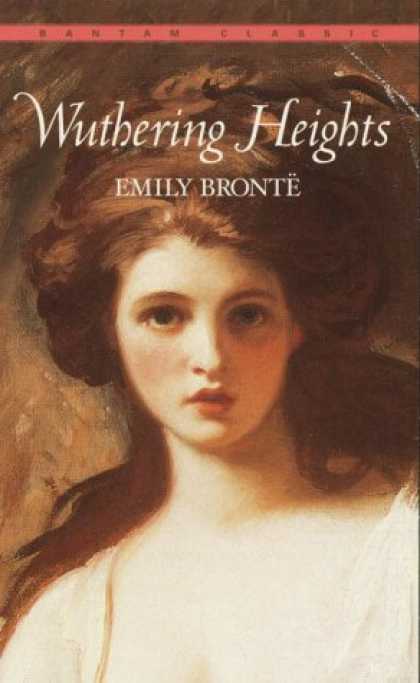
Perhaps to strengthen the film's claim to historical accuracy, Alexander Korda made use of two famous pictorial representations of Lady Hamilton and Lord Nelson. The first, George Romney's famous portrait of the Lady, is recreated as the first image we see of the young Emma (the story is narrated in flashback by Leigh in old-age makeup). Hamilton was, in reality, one of the era's most famous artist's models. In a bit of coincidental Viv & Larry trivia, one of Romney's portraits of Lady Hamilton would later appear on the cover of an edition of Wuthering Heights, the adaptation of that book being Laurence Olivier's first Hollywood role.
Certainly, the resemblance in the two women is uncanny and was justly exploited by Korda's publicity department.
"Emma Hart in a Straw Hat" by George Romney, 1782-84
Leigh as Emma, Lady Hamilton
While the first re-created artwork is obvious as a re-creation (a painting in a frame), the second is subtler and more effective, and requires a knowledge of the original painting to understand the homage.
The death of Lord Nelson is one of the most famous events in English lore and history and as such, has been re-staged many times by many artists.
The Death of Nelson, 21 October 1805" by Arthur William Devis, 1807
The death of Nelson, recreated
Although perhaps an instantly recognizable tableau to British audiences, I for one, didn't recognize the shot as a reference to Davies' painting, as I assume American audiences in 1941 didn't either. Of course the shot, which begins as a close-up on Nelson's maimed body and slowly tracks back to a wide shot of the officers and crew gathered at his deathbed, is still an emotionally effective climax to the picture, whether one recognizes the reference or not.
"There is no 'then.' There is no 'after.'"
That Hamilton Woman was reputedly Winston Churchill's favorite film--and no wonder given its stalwart mythologizing of Lord Nelson translates none too subtly to mythologizing of Churchill himself. In 1940, Winston seemed like a goddamned seer, having correctly predicted, and warned of, Hitler's being, you know, totally evil. If he hadn't been in the midst of the most dire political conflict of the 20th century, I image Churchill would have been damned smug.
The Nelson/Churchill myth-making is an interesting by-product of a film that gleans its uniqueness from telling the Nelson story from the point of view of his mistress. Regardless of how strong a character Emma is (very) or how great Leigh's performance is (very), this is still Lord Nelson's story. It is his acts of bravery and sacrifice that inspire a nation at war; Lady Hamilton, for all her refinements and for as much as Nelson loves her, remains a fallen woman.
From this...
The film opens several years after Nelson's death. Emma Hamilton is an old woman reduced to begging for spare change. In a drunken stupor, she's jailed and there, narrates the story of her former glory to another prostitute. When the former Lady finishes her story, her fellow inmate eagerly asks her what happened after Nelson died, what happened next. Emma's sullen reply: "There is no 'then.' There is no 'after.'" Because both Nelson and Hamilton were married--to other people--their relationship could never gain legitimacy: Emma and the couple's bastard child were left to rot in Parisian port cities, penniless.
...to this
The film's dim attitude towards the sacrifices Lady Hamilton made for England--once a whore, always a whore, that kind of thing--is a rather bleak view of things for a film called, after all, That Hamilton Woman. But the title is more a scandalized accusation that a heroic exaltation. And the film's less than happy ending is curious considering how glamorous and downright beautiful the rest of the picture is. It is, in the end, a wartime movie and filmed entirely pre-Pearl Harbor, an Allied victory in WWII was far from certain.
"Lie back and think of England"
The idea of self-sacrifice for King and Country was so strong in all aspects of this production, it translated in a very real sense to issues of national security. At the time of filming, Alexander Korda was being investigated by the United States government for meddling in our isolation affairs and trying to incite the country to war. By the time the film was released, however, the United States had finally entered the war and Korda was no longer being investigated. It has long been suspected that Korda was doing more than making propaganda films for good ol' Winston. Korda was knighted in 1942, ostensibly for his contributions to national morale making patriotic pictures during the war, but many still believe he was doing some spying for The Crown on the side.
All of this political intrigue backstory has little impact on the film as seen today. That Lady Hamilton is completely watchable and enjoyable as an historical romance, starring two very pretty people speaking very pretty lines in very pretty costumes and in very pretty sets. It represents a truly forgotten era of filmmaking. Korda's production was, if you can believe it, shot in five weeks on a wartime budget of strict rationing. The limitations don't show at all. That Hamilton Woman is as beautiful and thrilling as any film of its kind.